



TRUNG TÂM SÁNG TẠO,
KHAI THÁC DỮ LIỆU
NATIONAL CENTER ON DATA INNOVATION
Sunday - 12/07/2026
VIE
Sunday - 12/07/2026
Zalo

“Humans can go without food for days, without water for a couple of days, but they cannot stop breathing for more than a few minutes” – this simple philosophy of survival seems to be forgotten amidst the hustle and bustle of modern urban life. Of all the things that sustain a body, air is inhaled the most, about twenty thousand times a day, yet it is sometimes the least considered. Clean air determines the quality of life today, and the health of future generations.

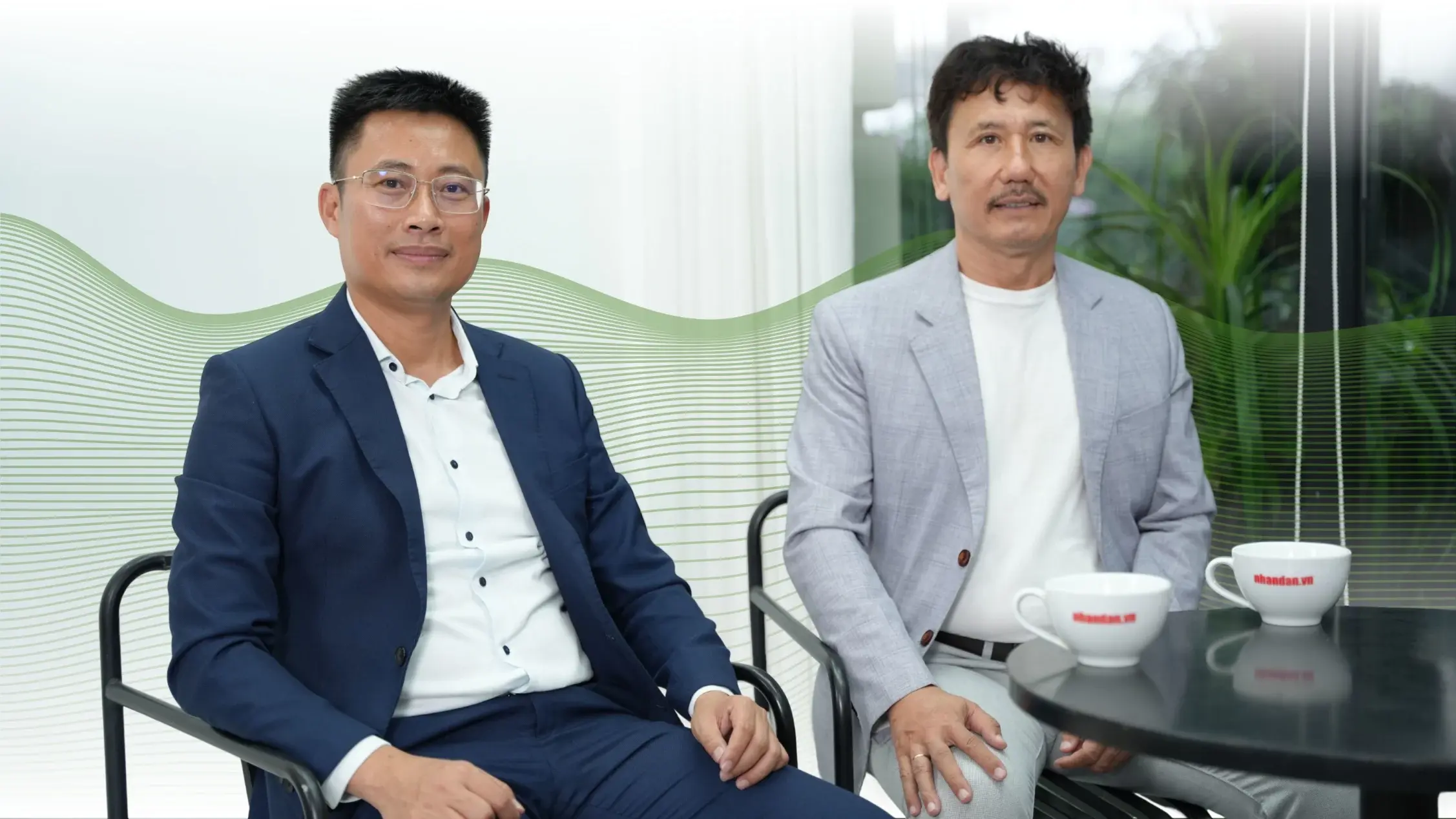
On World Environment Day, June 5th, People's Coffee interviewed Master Nguyen Minh Thai and engineer Bui Sy Giang. Both guests are members of the Vietnam Association of Refrigeration and Air Conditioning Engineering, experts who have been involved for many years in assessing, monitoring, and finding solutions to improve air quality in living spaces.

emg3_bai2.webp

During the sweltering early summer days, the reflex of most urban dwellers is to close doors, lower curtains, and turn on air conditioning, convinced that the glass and walls are sufficient to block out external pollution. In reality, people are often wary of visible dirt on surfaces, but easily overlook the hidden risks within the space. A room that initially appears neat and bright easily lulls people into a feeling of security. Engineer Bui Sy Giang calls this a common misconception: that simply staying in a closed room will prevent dust and pollutants.
emg4_bai2.webp

For Master Nguyen Minh Thai, who has been involved in compiling the textbook on Humidity Control Techniques since 2007, his connection to this field is almost a special coincidence. Through many years of research and work in the industry, he has increasingly recognized the important role of humidity control in health and quality of life.

According to him, many factors affecting humans are invisible to the naked eye. Air humidity is a prime example, as it directly impacts the living environment, the potential for mold and bacteria growth, and respiratory problems. Therefore, he always believes that: "What is invisible to the naked eye actually affects human health more than we realize." This is also the motivation for him to continue pursuing, researching, and disseminating knowledge in the field of air and humidity control.

As for engineer Bui Sy Giang, he recognized the crucial role of clean air even during the severe Covid-19 pandemic. As the father of four young children, he was always concerned about his family's respiratory health. With the mindset of an engineer, he independently researched and experimented with various air purification solutions at home, and the results were clearly visible in his own family. “My respiratory allergies have become less frequent, and my children have fewer minor illnesses and ear, nose, and throat infections. That’s what makes me happiest,” he recounted. It was this experience as a father that elevated his engineering work beyond mere livelihood, transforming it into a burning desire to use technological capabilities to protect the community's breathing.

emg3_bai2.webp

There's a term that's quite commonly misunderstood in the construction industry: "fresh air." Master Minh Thai points out that the very word "fresh" has lulled many into a stereotypical mindset: "Hearing the word 'fresh,' people automatically assume that the more they bring in, the better. The danger lies in that very thought," he says.

This term is a direct translation of "fresh air" from Western technical documents, originating from a time when natural air was truly clean. But with PM2.5 concentrations in Hanoi among the highest in the world, if we continue to bring that "fresh" air into our homes, we are inadvertently introducing harmful substances and fine dust into our lungs. In a humid tropical country like Vietnam, directly bringing a stream of air carrying dust and humidity, sometimes reaching 95%, into an air-conditioned room may not necessarily be beneficial to health. Therefore, experts want to give it a more accurate definition: "bringing in outside air." Only after that air stream is filtered, dehumidified, and properly treated can it be called fresh air in the true sense.

Furthermore, for city families living in apartments, there's an area that even the most upscale buildings often overlook: the ductwork and central air conditioning system. The inside surfaces of these ducts can frequently accumulate water and become a breeding ground for mold if not regularly maintained. Each time the system restarts after a long shutdown, the accumulated mold and bacteria are blown throughout the room, turning the ceiling into a secondary source of pollution. Master Minh Thai argues that understanding the principles of supply and exhaust airflow from the design stage would lead to much more effective treatment, instead of allowing the ceiling ductwork to become a breeding ground for and then release pollution.

Another concern shared by experts during the conversation was air quality for vulnerable groups, as children, the elderly, and the sick are among those who need clean air the most. Vietnam has established air quality standards for public buildings and schools, but their application is not yet mandatory, so this issue is still overlooked in many places. When choosing a school for his child, engineer Giang's first consideration is whether the environment prioritizes air filtration systems. He hopes that one day, air quality in classrooms will be recognized as an essential part of the infrastructure, on par with desks, chairs, and lighting.

On a broader level, once the outside air source becomes excessively polluted, the method of bringing in fresh air to dilute the concentration of pollutants gradually reaches its limit. Many countries therefore add a second set of solutions: directly treating pollutants within the space using technology. Driven by concerns for a practical solution for enclosed spaces, engineer Bui Sy Giang and his colleagues dedicated their efforts to researching and successfully developing Tin Phong, an autonomous air purification and disinfection robot. The device proudly displays the image of the Vietnamese flag, conveying pride in the intelligence and technological capabilities of the Vietnamese people. Through testing and measurements, if someone smokes in the room, the PM2.5 fine dust index immediately jumps to over 200 micrograms/m³. However, after a period of operation, that number drops to around 4.9 micrograms, and the amount of microorganisms on the surface decreases by more than ten times, bringing the surface back to a clean state. These intangible risks can now be measured and controlled using domestically developed technological solutions.

Publication Date: June 2026

Production Organization: Khanh Son

Execution: Anh Thu

Layout: Anh Thu - Thuy Dung

By nhadan.vn
Comment (0)
to comment
Your comment will be reviewed before being posted
    Success
    CommentSubmittedSuccessfully
    Your comment is under review